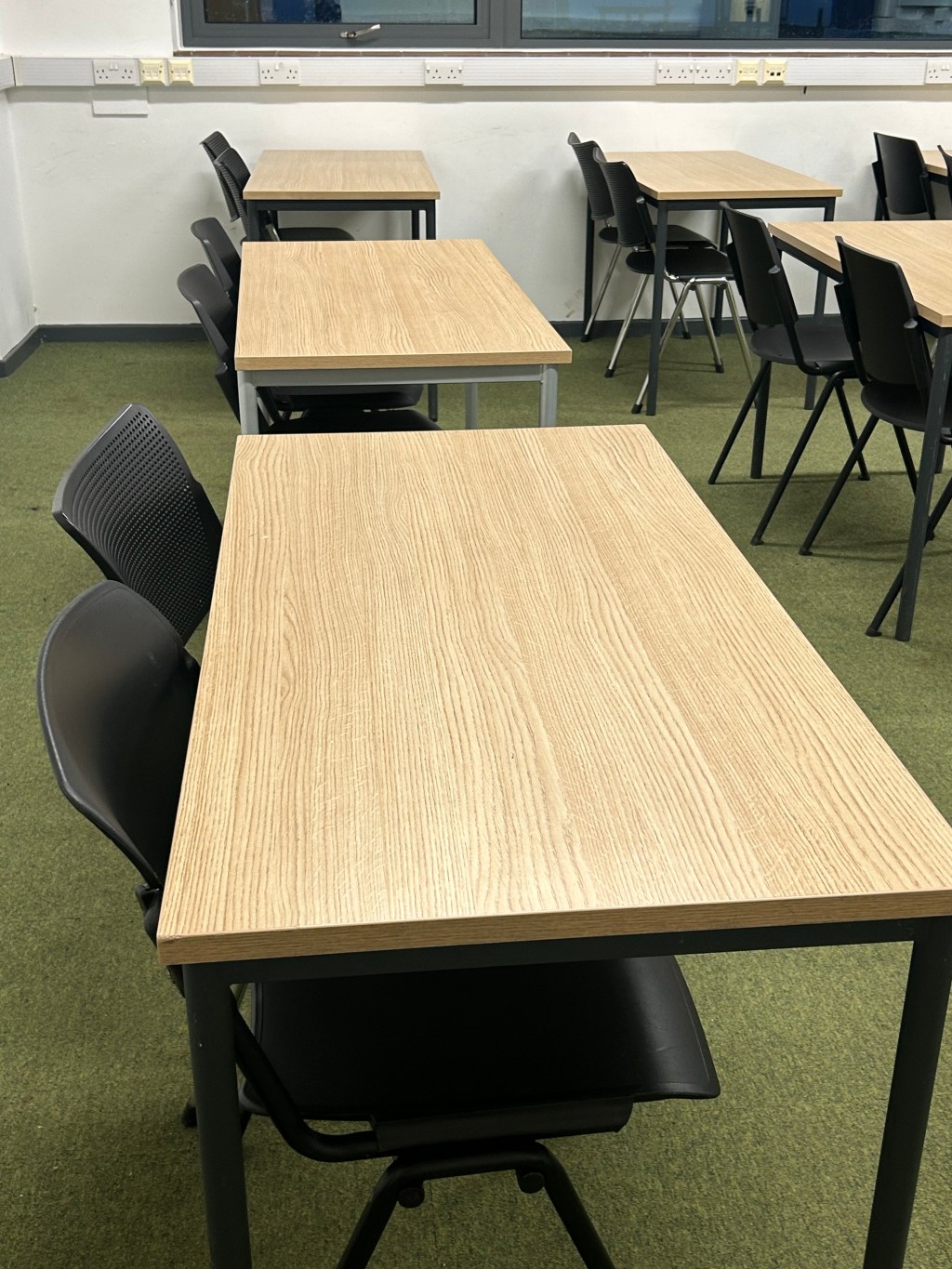
The School Day That Feels Familiar
Think back to your school days — the ringing of the bell, the rows of desks, the strict timetables, the pressure to sit still and follow rules. For many of us, it felt less like a place of discovery and more like a place of control.
That’s not a coincidence. The school system in the UK was built during the rise of industry — shaped to mirror the factory floor, not to nurture creativity or individuality. Bells signalled when to start and stop, just like factory shifts. Children were lined up in rows, much like workers on a production line. The goal wasn’t curiosity — it was compliance.
The Industrial Birth of Modern Education
Before the Industrial Revolution, education largely depended on a family’s ability to pay. The poorest children rarely attended school or only received basic instruction through Bible classes.
When the Industrial Revolution transformed society, education had to change too. Factories needed workers who could read, write, and follow instructions. Governments began enacting laws to make schooling compulsory and free — not necessarily to enrich children’s minds, but to prepare them for factory life.
This new system was deliberately structured to produce compliant workers by focusing on punctuality, obedience, and conformity. Schools aimed to shape children into adults who would be reliable, rule-following contributors to the industrial economy.
Systems mirrored industry in several ways:
- Bells → start/stop like factory shifts.
- Rows of desks → production lines.
- Memorisation and obedience → discipline for repetitive work.
Part of this memorisation relied on a technique called rote learning — memorising by repetition. You learn something by repeating it over and over again. But rote learning limits understanding, discourages critical thinking, and doesn’t work for all learners.
It still exists today. It has its place — but it should never be the only way we learn.
The Cost of the Factory Model
Children were seen as being the same — taught the same, expected to behave the same, and measured the same. Assembly lines, age-based groupings, whole-class instruction, grading, and standardisation all reflected the factory mindset.
They were treated like identical products running on a conveyor belt — the raw material (children) processed by workers (teachers) in a factory (school).
Mistakes were often punished harshly — through physical discipline or repetitive writing — instead of being seen as a natural part of learning. But mistakes are how we learn. We learned to walk by falling down, didn’t we? The same goes for writing, reading, and every skill we’ve ever mastered.
Mistakes should be welcomed, celebrated, and learned from. They’re signs of growth, not failure.
Unfortunately, creativity, play, and imagination were sidelined. The unspoken message absorbed by generations was simple:
Follow the system. Don’t question it.
Why This Model No Longer Fits
The scars of this system run deep — fear of failure, fixed mindsets, and a reluctance to learn as adults. This isn’t the fault of the learners; it’s the fault of a system designed for another era.
It emphasised passive learning, rote memorisation, and a rigid “one-size-fits-all” approach. But not every child (or adult) learns in the same way.
Education should be flexible and differentiated — meeting each learner where they are. Only then can we truly support individuals to reach their potential, and build a system that serves all of us, not just the few.
Today’s world needs something very different: adaptability, collaboration, problem-solving, and a growth mindset.
What We Can Learn from Nature Instead
Look at nature — no two trees grow alike. No two leaves, snowflakes, or blades of grass are the same. A forest thrives because of its diversity.
If we used nature as a model for education, we’d value flexibility and inclusion. We’d understand that growth happens at different speeds and in different shapes. We’d celebrate difference instead of trying to make everyone the same.
Nature values resilience, creativity, and variety — exactly what schools often squeezed out of us, and sadly, still do today.
If education mirrored nature, we’d see difference not as a problem to be fixed, but as the very thing that makes learning thrive.
Reclaiming Our Story
School was never designed to make us thrive — but we can unlearn its lessons.
We can rebuild our confidence, reclaim creativity, and learn differently.
After all, real learning doesn’t happen in lines — it happens when we step outside them.
What part of school always felt most like a factory to you — and how do you think it shaped the way you see yourself now?
Please comment below 👇
If this resonates, you’re welcome to share it or sit with it.

 Rewritinglearning.com
Leave a comment