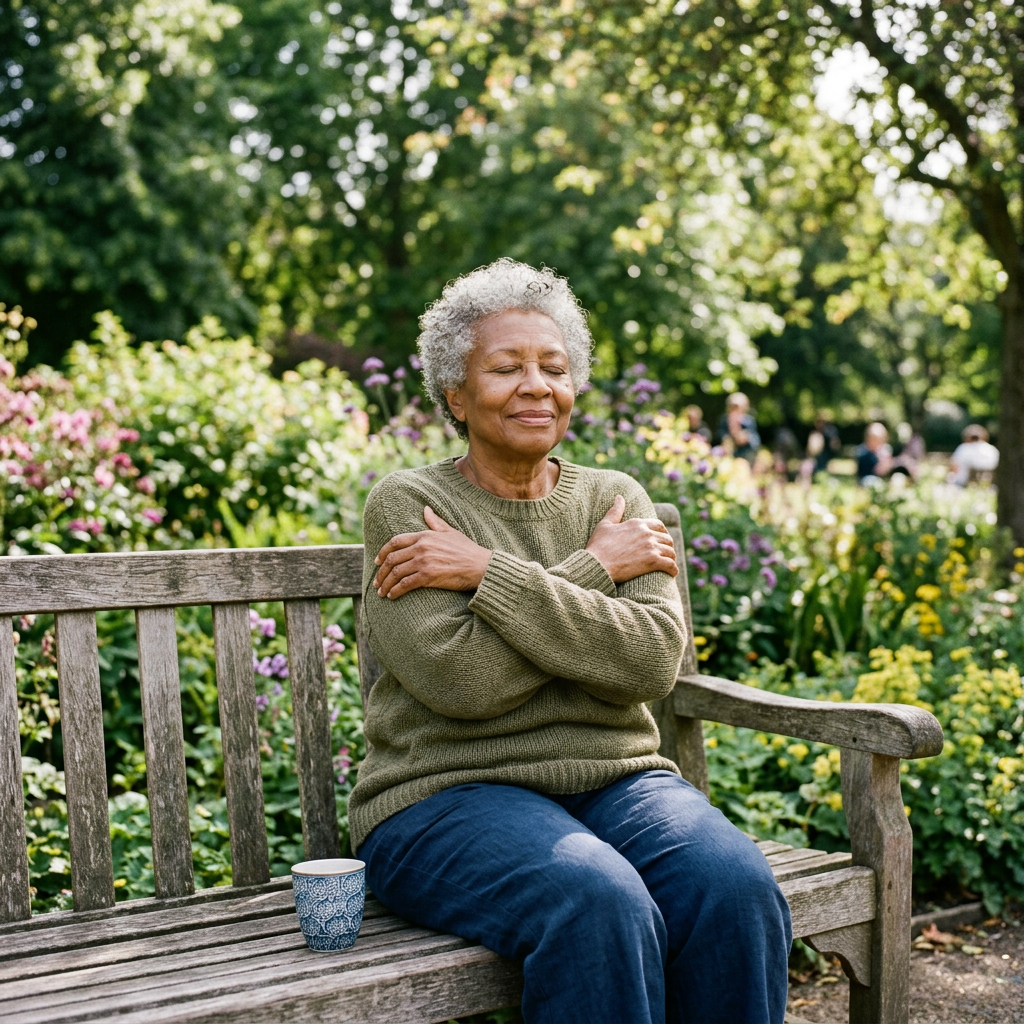
Many of us spend our lives trying to become “better” versions of ourselves — more productive, more confident, less anxious, more resilient. But underneath many of these struggles is often something much simpler:
We do not feel safe.
Not necessarily unsafe in obvious ways, but emotionally unsafe. Unsafe to fail. Unsafe to rest. Unsafe to make mistakes, speak honestly or disappoint others. Over time, the nervous system learns to stay alert, constantly scanning for pressure, criticism or rejection.
For some people, this begins early.
Children learn emotional safety through relationships. When they are comforted, listened to and responded to consistently, they begin to understand that difficult feelings can be managed safely. They learn that emotions are not something to fear or hide.
But when children grow up around constant stress, criticism, unpredictability or pressure, the nervous system adapts differently. Survival becomes the priority. Some children become hyper-independent. Others become people-pleasers. Some stay quiet to avoid attention, while others struggle to regulate big emotions.
These responses are not personality flaws. They are adaptations.
The difficulty is that these patterns often continue into adulthood.
Many adults live in a constant state of overwhelm without fully recognising it. Rest can feel uncomfortable. Slowing down can trigger guilt. Mistakes can feel far bigger than they really are. The body remains prepared for pressure, even when danger is no longer present.
Learning to feel safe again is not about becoming calm all the time. It is about teaching the nervous system that it no longer needs to stay in survival mode.
And this usually begins with small things.
Predictable routines.
Rest without guilt.
Time in nature.
Supportive relationships.
Movement.
Moments of quiet.
Speaking to ourselves with more kindness than criticism.
For children, safety often comes through co-regulation — calm adults helping them manage overwhelming feelings until they are eventually able to do it themselves. A regulated adult nervous system helps children feel secure enough to settle.
Adults need this too.
Not necessarily someone to fix them, but environments and relationships that allow them to exhale rather than constantly brace themselves.
Perhaps this is why healing and learning are so closely connected. When people begin to feel emotionally safe, curiosity often returns with it. Creativity returns. Confidence returns. The nervous system slowly learns that life is not only something to survive, but something to participate in.
Feeling safe does not happen overnight. It is built gradually, through repetition, trust and compassion.
And perhaps that is where growth really begins — not in pushing ourselves harder, but in finally feeling safe enough to soften.


Leave a comment